Recycling and Sustainability — Commercial Waste Penge
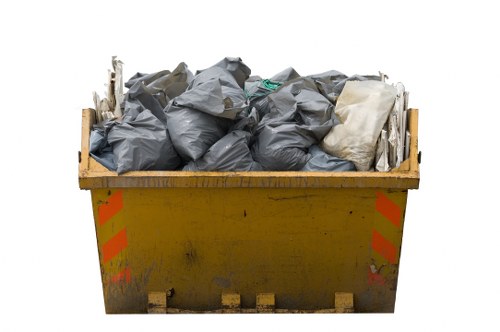 Commercial Waste Penge is committed to creating an eco-friendly waste disposal area that supports local businesses, reduces carbon emissions and builds a true sustainable rubbish area across the neighbourhood. This overview explains our ambition, operational steps, and the measurable targets that drive improvements in commercial recycling across Penge and the surrounding boroughs. Our approach balances regulatory compliance with practical on-the-ground solutions for shops, offices and light industry.
We have set a clear recycling percentage target for commercial collections: to divert 70% of all non-hazardous commercial waste from landfill by 2030. That goal reflects the broader London boroughs' approach to waste separation, where dry recycling streams (paper, card, plastics), glass, and food waste are sorted at source wherever possible. Businesses are encouraged to segregate materials so they enter the reuse and recycling chain rather than residual disposal.
 Developing a recognisable sustainable rubbish area in Penge means coordinating collection schedules, consolidating loads and investing in infrastructure that supports high diversion rates. We collaborate with the boroughs to align commercial waste segregation with household schemes, supporting mixed-stream recycling where appropriate and maximising capture of organics through food waste collection when tenants and businesses participate.
Local transfer stations and consolidation hubs
To maintain an efficient low-impact supply chain, Commercial Waste Penge utilises nearby local transfer stations and consolidation hubs. These facilities act as short-hop centres where recyclables are tipped, sorted and bulked for onward transport to material recycling facilities (MRFs) and anaerobic digestion plants for food waste. Rather than long-haul trips from every site, consolidation reduces vehicle miles and improves load factors across 24/7 operations.
 Typical recycling activity in the area includes the separate handling of paper and cardboard, glass-crushed loads, segregated light plastics, metals and source-separated food waste for composting or energy recovery. Our logistics plans identify the most appropriate local transfer stations — consolidators that prioritise reuse and recycling routes over incineration and landfill — and coordinate movements to match local processing capacity.
Partnerships with charities and reuse networks
We actively build partnerships with local charities, social enterprises and community reuse organisations to divert bulky or reusable commercial items from the waste stream. Furniture, textiles, surplus fixtures and working appliances are directed to refurbishment partners when possible, creating social value in Penge and reducing the volume of waste requiring disposal. These collaborations also support local employment and second-life markets. The fleet that serves Penge is an essential part of our sustainability plan: we operate low-carbon vans and smaller rigid vehicles to reduce emissions in the urban environment. Electric vans are integrated for short urban runs and multi-stop collections, while hybrids and efficient diesel vehicles are reserved for heavier loads that still lack zero-emission alternatives. Route optimisation software and scheduled consolidation further drive down CO2 output from collections.
Commercial waste in Penge benefits from targeted operational measures: frequency-based collections for high-volume businesses, shared bins for shopfronts, and clear labelling to support the boroughs' waste separation policy. Staff training emphasises correct sorting and contamination prevention so that materials logged at the transfer station arrive in recyclable condition. Regular audits help maintain high capture rates for recyclables and organics.
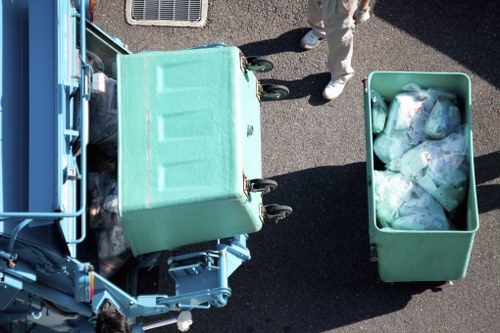 Our monitoring framework publishes the metrics that matter: recycling percentage achieved, tonnes diverted from landfill, vehicle kilometres reduced through consolidation, and social impact from charity partnerships. We report progress toward the 70% target annually and adjust operational plans where bottlenecks occur, always with an eye to creating a resilient, low-carbon commercial waste service that supports a greener Penge.
In practice, creating a thriving sustainable rubbish area in Penge means working with property managers, retailers, hospitality venues and local authorities. By aligning commercial waste procedures with borough-level separation rules, using local transfer stations effectively, partnering with charities for reuse, and deploying low-carbon vans, the area reduces environmental impact while supporting circular economy outcomes. Together these steps make Commercial Waste Penge more than a collection service — it becomes a coordinated effort to promote reuse, recycling and reduced emissions across the community.
We continue to refine the model in response to changes in material markets and local infrastructure. Initiatives under consideration include expanding electric vehicle coverage for early-morning collections, piloting on-street consolidation points for small businesses, and increasing the proportion of diverted commercial food waste into local anaerobic digestion schemes. These actions aim to ensure that the eco-friendly waste disposal area in Penge remains robust, adaptable and effective.
For businesses seeking to be part of a visible shift toward sustainability, participation in separated streams, contribution to charity reuse programmes and collaboration on shared loading and transfer station use are practical steps with measurable outcomes. The collective work of businesses, hauliers, borough services and community partners creates a stronger, greener Penge — a true commercial waste and recycling ecosystem rooted in local action and long-term targets.
