
Insurance and Safety for Commercial Waste Penge
Commercial Waste Penge operates as an insured rubbish company committed to protecting clients, staff and the public. This page explains how our insurance cover, staff training, personal protective equipment and risk assessment processes work together to make us a trusted insured waste removal partner for businesses across Penge and surrounding areas. We focus on clarity: what insurances we hold, how our teams are trained, what PPE they use, and the step-by-step risk assessment process that underpins safe, compliant site operations.Public Liability Insurance — protection you can rely on
As an insured waste removal specialist, we maintain comprehensive public liability insurance to protect both the client and our teams against claims arising from property damage or injury. Public liability cover is a cornerstone of any reputable insured rubbish removal company: it covers third-party injury and third-party property damage claims that can occur during waste collection, transfer or disposal. Our policies meet industry-standard limits and are underwritten by recognised insurers so that businesses contracting our insured commercial waste service can proceed with confidence.
Why public liability matters for an insured rubbish business
- Financial protection: pays settlements and legal costs for covered claims.
- Operational continuity: reduces business interruption caused by incidents.
- Client assurance: demonstrates the credentials of an insured rubbish company.
Structured staff training for safe waste handling
Our approach to staff competence is multi-layered. New operatives receive a formal induction covering company safety policies, emergency procedures and the correct use of PPE. All drivers and manual handlers undertake manual handling training and secure-load demonstrations so that our insured rubbish removal company reduces the risk of musculoskeletal injury and load-shift incidents. We use a combination of classroom, practical and on-site mentoring to ensure training is effective and applied in real work situations.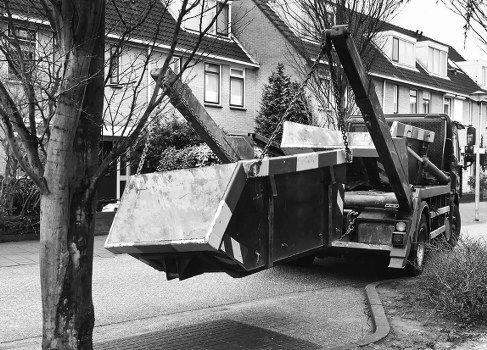
Ongoing competence and assessments
Training does not stop at induction. We run periodic refresher courses, toolbox talks and role-specific upskilling: hazardous materials handling, sharps awareness, traffic management and confined-space awareness where relevant. Records of qualifications and refresher dates are retained for every operative so that an insured waste removal contract carries demonstrable competence. Supervisors perform competency checks and sign off before staff lead higher-risk tasks.The training matrix aligns with our insurance requirements and helps reduce premiums by minimising incident rates — a practical example of how a well-managed insured rubbish company adds value beyond paperwork.
PPE: specification, provision and maintenance
Personal protective equipment is selected to match the hazards identified in our risk assessments. For a commercial waste Penge operation, this typically includes high-visibility clothing, steel-toe boots, cut-resistant gloves, eye protection and respiratory protection where dust or bioaerosols are present. PPE forms a vital last line of defence and is issued free to staff as part of employment: the insured commercial waste service ensures operatives are never expected to supply their own kit.Key PPE items:
- High-visibility jackets and trousers
- Protective gloves (cut and chemical resistant as required)
- Safety boots with toe protection
- Safety glasses and face protection
- Disposable or reusable respiratory protection (fit-tested where necessary)
Safe use is enforced through training, signage and supervision. Our insured rubbish removal teams understand when PPE is mandatory, how to use it correctly and the reasons each item is specified for a task.
Risk assessment process: systematic and site-specific
A rigorous risk assessment process underpins every contract. We follow a structured approach: identify hazards, evaluate the level of risk, implement controls using the hierarchy of control (elimination, substitution, engineering controls, administrative controls, PPE), and record the outcome. This process ensures that every site that an insured rubbish company attends has a documented safety plan tailored to the local environment, traffic patterns, access constraints and waste types present.
Site surveys and documentation
Before work begins we perform a site survey to document hazards such as vehicle movements, pedestrian routes, overhead obstructions and contamination risks. The resulting site-specific risk assessment includes control measures, who is responsible for each control, and monitoring arrangements. Records are retained and made available internally for audits and insurer reviews.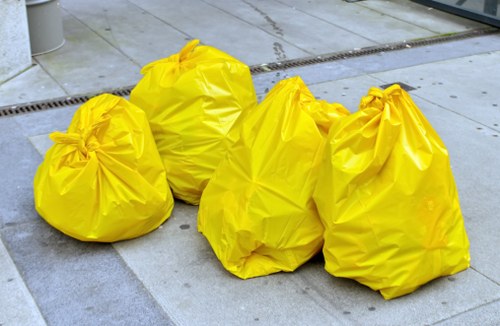 Dynamic risk assessments are conducted on arrival and periodically during operations to capture changing conditions (weather, unexpected wastes, site activity). This live assessment process is crucial for an insured waste removal firm because it demonstrates proactive risk management: adjustments are made immediately when new hazards are identified, reducing the likelihood of incidents and supporting the validity of public liability cover.
Commitment to safety and insured operations
Our combined emphasis on public liability insurance, consistent staff training, correctly specified PPE and a documented risk assessment process makes us a dependable insured rubbish company for commercial clients. These elements work together to protect people, property and the environment while delivering efficient commercial waste services in Penge.
We maintain clear records of insurance certificates, training matrices, PPE issue logs and risk assessments which form part of our governance and continuous improvement cycle. This approach ensures compliance, supports smoother contract delivery and demonstrates that safety and insurance are integral to our commercial waste operations.
