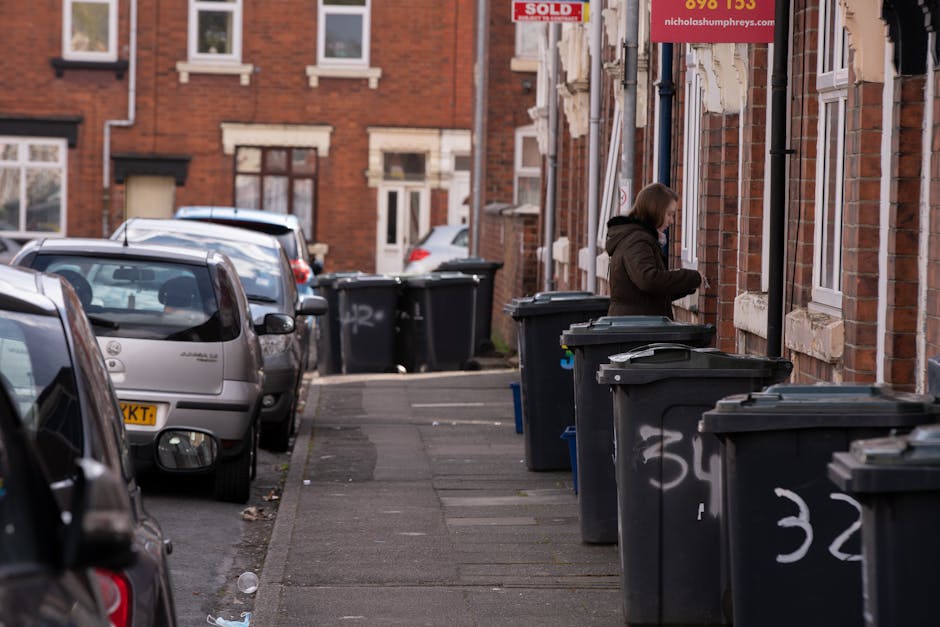
Penge High Street rubbish removal guide for flats

If you live in a flat on or near Penge High Street, rubbish removal can feel oddly complicated. There are stairwells to think about, neighbours to keep in mind, limited storage, and the eternal question of where the bulky stuff is actually going to fit. This Penge High Street rubbish removal guide for flats is here to make it simpler. Whether you are clearing a single sofa, dealing with a room full of bagged waste, or planning a full flat clearance, the right approach saves time, hassle, and a lot of unnecessary back-and-forth.
Truth be told, flat waste is rarely just "put it out and it disappears". Access matters. Timing matters. So does choosing the right removal method for the building, the amount of waste, and the type of items involved. In this guide, you'll find a practical, localised breakdown of how to do it properly, what to avoid, and when a professional service is the smartest option.
Why Penge High Street rubbish removal guide for flats matters
Flats on a busy street like Penge High Street tend to create a specific kind of waste challenge. Space is tighter, access can be awkward, and one person's "quick clear-out" can become a shared inconvenience for the whole building if it's not handled neatly. A pile of rubbish in a hallway is never a good look, and it can quickly become a fire escape issue, a trip hazard, or simply a source of friction with neighbours and managing agents.
There's also the practical side. When you live upstairs, every bag, broken chair, or old appliance has to be moved through shared spaces. That means extra care, more planning, and a sensible method for getting things out without scratching walls, blocking entrances, or turning a lift lobby into a temporary storage room. That's especially true in older conversions, maisonettes, and purpose-built blocks where corridors are narrow and staircases are not exactly generous. Been there, done that, got the scuffed wall to prove it.
This matters because poor planning usually costs more in the end. Waste left too long can attract pests, annoy neighbours, and create avoidable stress. A proper flat rubbish removal plan keeps things calm, tidy, and compliant with building expectations. If you need a broader service for contents and unwanted items, the flat clearance service can be a useful fit, while larger mixed loads may be better handled through waste removal.
Expert summary: For flats, the best rubbish removal method is usually the one that balances access, volume, and building rules. Fast is good. Neat is better. Quietly efficient is best of all.
How Penge High Street rubbish removal guide for flats works
The basic process is straightforward, but the details matter. In a flat, rubbish removal usually starts with identifying the waste type, then checking access, then deciding whether you can carry it out in stages or need a same-day collection. Small bagged rubbish may be simple enough to move down the stairs and into a suitable collection point. Bulky items, however, often need two people, protective handling, and a route that avoids disruption.
Most flat clear-outs follow the same general pattern. First, you sort items into categories: general rubbish, recyclable items, reusable furniture, electricals, and anything that needs special handling. Then you decide whether it's a bin-day job, a council collection issue, or a professional removal job. If you're dealing with furniture, it may help to look at furniture disposal or furniture clearance if several pieces need to go at once.
For many flat residents, the key question is not "can I remove it?" but "can I remove it without creating a mess in the building?" That's the real difference. Professional teams are used to working around stairwells, parking limitations, and narrow access points. They tend to remove items in a way that keeps shared areas clear. If an item is heavy, damp, awkward, or simply too much for one person, a structured collection is often the better route.
As a rule of thumb, rubbish removal for flats works best when the plan is simple:
- identify the waste
- separate anything reusable or recyclable
- check access and timing
- keep hallways and entrances unobstructed
- remove everything in one organised flow
That last bit sounds obvious, but it's where many people trip up. Half-cleared rooms and bags left by the door have a habit of hanging around for days. Not ideal.
Key benefits and practical advantages
Good rubbish removal does more than make a flat look tidy. It can make the whole place easier to live in. The benefits are practical, immediate, and usually more noticeable than people expect. You walk in, the air feels lighter, and suddenly the room you'd been avoiding is usable again. Small miracle, really.
Here are the main advantages:
- Less stress: You are not constantly stepping around bags, boxes, or broken items.
- Better use of space: Clearing clutter can make even a small flat feel larger and calmer.
- Safer movement: Clear floors reduce trip hazards, especially in narrow hallways.
- Cleaner shared areas: You minimise mess in stairwells, corridors, and entrance lobbies.
- Faster turnaround: A professional or well-planned removal usually gets the job done in one visit.
- Better recycling outcomes: Sorting items properly improves the chance that usable materials are diverted from disposal.
There's also a useful financial angle. A rushed or badly planned clear-out can lead to wasted time, repeat trips, or extra handling for awkward items. By contrast, a tidy, organised approach often cuts the hidden costs of living with clutter. If you're comparing services, the pricing and quotes page is a sensible place to start, especially if you want to understand what affects the cost of a flat collection.
Who this is for and when it makes sense
This guide is for anyone in a flat who needs to remove rubbish, bulky items, or mixed household waste without creating a scene in the building. That includes tenants, leaseholders, landlords, letting agents, and people helping family members clear a property. It also suits residents who are dealing with a one-off job rather than a full renovation or moving day.
It makes particular sense if:
- you have no lift, or the lift is too small for bulky items
- you need to clear a flat quickly before handover or inspection
- the waste includes furniture, appliances, or mixed household items
- the building has strict shared-area rules
- you don't want to leave bags outside overnight
- you're not sure which items can go with ordinary rubbish
It is also useful if you are combining rubbish removal with a wider property clearance. For example, a landlord emptying a rental flat may need both waste removal and furniture handling. In that case, home clearance or house clearance may be relevant, depending on the scale and type of contents. If you only need one or two items taken away, keep it simpler. No need to make a mountain out of a sofa.
Step-by-step guidance
The cleanest results usually come from a straightforward process. You do not need a complicated system; you just need one that matches flat living.
- Walk through the flat first. Make a quick list of what actually needs to go. A five-minute scan often reveals more than you expect.
- Separate waste into groups. Put general rubbish, recycling, furniture, appliances, and anything potentially hazardous into separate piles.
- Check what the building allows. Some blocks have rules on timing, lift use, loading bays, or where items may be left. Don't assume.
- Measure bulky items if needed. A wardrobe that looks manageable in the room may be a nightmare in the stairwell.
- Protect the route out. Use blankets, cardboard, or careful carrying if walls and bannisters are tight. A small scrape can become an annoying repair job.
- Book the right removal method. For mixed loads or heavy items, a professional collection is often the easiest option.
- Keep access clear on the day. Move bikes, prams, and loose items out of the way before the team arrives.
- Do a final sweep. Check cupboards, balconies, and behind doors. The oddest things hide in the oddest places.
If you have appliances to shift, it's worth separating them early. Fridges, washing machines, and similar items are usually better handled as part of a specific appliance collection. The fridge and appliance removal service can be especially useful where there is weight, awkward size, or built-in fitting to consider.
And if the job also involves an old bed or sofa, those items deserve their own plan. They are bulky, fibrous, dusty, and often more annoying than expected. For that, mattress and sofa disposal gives a cleaner route than trying to wrestle them through communal hallways by yourself. Let's face it, nobody enjoys dragging a mattress down three flights of stairs at 8am.
Expert tips for better results
After enough flat clear-outs, a few patterns become obvious. The people who have the smoothest experience usually do a handful of small things well.
- Book for a quieter time: Mid-morning or early afternoon can be easier in busier blocks than the school-run rush or late evening.
- Keep items near the exit only when needed: Staging is useful, but don't block your own hallway for days.
- Use bags you can actually lift: Overfilled sacks are where backs complain. And backs do complain.
- Ask about disassembly early: Breaking down flat-pack furniture can save space and reduce carrying problems.
- Think about separation before the collection: A quick sort at source makes the whole process faster.
One practical tip that often gets overlooked: keep a "maybe" box. Put uncertain items in there while you sort the flat. That way, you avoid stopping every two minutes to debate whether a lamp, basket, or old cable is staying or going. Tiny trick, surprisingly helpful.
If your waste includes mixed oddments from a DIY project, the rules of handling matter even more. Broken plasterboard, timber, tiles, and packaging should not be treated the same way as ordinary household rubbish. In that situation, builders waste clearance may be a more suitable route than standard rubbish removal. For residents with wider waste needs, the broader waste removal service is also worth comparing.
Common mistakes to avoid
Most problems in flat rubbish removal come from rushing or underestimating the logistics. It's rarely dramatic. It's usually just a series of small oversights that add up.
- Leaving everything until the last minute: That's how hallways become storage.
- Not checking building rules: Some blocks are relaxed, others are not. Better to ask first.
- Mixing all waste together: This makes sorting harder and can cause problems with items that need special handling.
- Ignoring access constraints: A bulky item may need to be dismantled before removal.
- Trying to move heavy items alone: This is where avoidable injuries and damaged walls happen.
- Forgetting about awkward waste streams: Appliances, electricals, and potentially hazardous items need more care.
There is also the classic mistake of assuming a skip is automatically the easiest answer. In a flat on a busy road, skip placement can be awkward or impossible, and permits or access issues can add more hassle than the waste itself. If you are weighing up options, what can go in a skip is useful background, but it doesn't always solve the flat-access problem. Sometimes the simplest answer is a collection that comes to you instead.
Another one: putting waste in a communal bin store because it seems temporary. It usually isn't temporary. It becomes "someone else's problem", which means everyone's problem. Not worth it.
Tools, resources and recommendations
You do not need a warehouse of equipment to clear a flat properly, but a few practical tools make the job easier and safer.
- Strong bin bags or rubble sacks: Use the right bag for the weight, not the cheapest bag in the drawer.
- Gloves: Handy for broken packaging, dusty corners, and items with sharp edges.
- Marker pens and tape: Good for labelling keep, recycle, and remove piles.
- Trolley or sack truck: Useful if your building access allows it and the items are safe to move this way.
- Protective blankets or cardboard: Helpful for tight stairwells and door frames.
- Clear bins or boxes: Ideal when sorting mixed items before collection.
On the service side, it helps to understand what you actually need. If the flat contains only a couple of bulky pieces, targeted furniture handling is usually enough. If you are removing a whole room's contents, a broader flat or home clearance may be more efficient. If you are unsure, a conversation before booking is often the best resource of all. Small misunderstanding, big difference. That's just how these jobs go.
For peace of mind, look at practical information around insurance and safety and the company's recycling and sustainability approach. If a team is handling sharp, heavy, or awkward waste in a shared building, you want them to be careful, not just quick.
Law, compliance, standards, or best practice
When rubbish removal is happening in flats, compliance is mostly about common sense, duty of care, and not causing avoidable problems for the building or the environment. In the UK, household and business waste should be handled responsibly, and that includes making sure items go to the right place and are not fly-tipped or left in communal areas.
For residents, the safest best practice is simple: keep waste on your side of the door until you are ready for collection, avoid blocking fire routes, and do not leave sharp, hazardous, or leaking items where they can harm anyone. If you are disposing of items that may count as hazardous, it is especially important not to guess. Paint, chemicals, batteries, and similar materials can require special handling. In that kind of case, hazardous waste disposal is the more appropriate route.
From a building-management perspective, shared spaces should stay clear. Hallways, lobbies, stairwells, and entrances are not dump points, even for a short time. If a collection is being arranged, best practice is to time it so the waste moves from flat to vehicle as directly as possible. That reduces risk, keeps neighbours happy, and generally feels more professional.
If you are handling documents alongside rubbish, confidential material should not just be thrown into a mixed bag. That is where confidential shredding can be useful, especially for residents clearing home offices or old paperwork in a flat. Not glamorous, but important.
Finally, if you are comparing services, check the company's health and safety policy, terms and conditions, and payment and security information. Those pages help you understand expectations before anyone starts lifting anything heavy. A little reading now can save a lot of confusion later.
Options, methods, or comparison table
There are a few realistic ways to handle flat rubbish removal on Penge High Street. The best option depends on volume, item type, access, and how quickly you need the space cleared.
| Method | Best for | Pros | Limitations |
|---|---|---|---|
| DIY bagging and bin disposal | Small amounts of general rubbish | Low cost, simple, familiar | Slow for larger jobs; limited by bin space and access |
| Skip hire | Larger clear-outs where placement is possible | Good capacity, straightforward once set up | Can be awkward for flats; access and placement may be difficult |
| Professional rubbish removal | Mixed loads, bulky items, tight access | Fast, tidy, less lifting for you | Usually costs more than doing it yourself |
| Specialist item disposal | Appliances, mattresses, sofas, confidential items | Handled appropriately and separately | May need item-specific booking |
If your flat is easy to access and the job is tiny, DIY is fine. If you are staring at a washing machine, two wardrobes, and three weeks of accumulated bagged rubbish, be honest with yourself. Professional help is probably the calmer option. If you want to explore a service built for that kind of job, the flat clearance page is a sensible next stop.
Case study or real-world example
Here's a realistic example. A tenant in a second-floor flat near Penge High Street is moving out on a Friday. The property has a bed base, a mattress, a small wardrobe, several bin bags, and a broken desk chair. The stairwell is narrow, and the building has shared access, so the goal is to clear everything without blocking the hallway or leaving items outside overnight.
In practice, the best approach is to separate the mattress and sofa-style bulky items from general rubbish, dismantle the wardrobe where possible, and keep the route out as clear as possible. The mattress is handled as a specific item, while the rest can go in a mixed load. The tenant also checks the building's move-out timing so there's no clash with other residents using the entrance. Nothing fancy. Just organised.
The result is usually a smoother handover, less stress on moving day, and fewer awkward conversations with neighbours. The biggest win is often not speed, but calm. You notice it most when you are carrying the final box out and realise the flat actually feels finished. That's a good feeling.
For a similar situation, a landlord clearing a furnished rental might need a wider service that covers multiple item types. In that case, house clearance or home clearance can be a better fit than piecing everything together separately.
Practical checklist
Use this checklist before collection day. It keeps things surprisingly orderly.
- Walk through the flat and confirm what is going
- Separate general rubbish, recycling, furniture, and special items
- Check access routes, lifts, parking, and building rules
- Measure anything bulky or awkward
- Break down furniture where safe and sensible
- Bag smaller waste securely and avoid overfilling
- Keep hallways and exits clear
- Set aside hazardous or confidential items for separate handling
- Confirm the collection time and point of contact
- Do a final sweep of cupboards, balconies, and storage areas
Quick takeaway: if the waste is light and limited, a DIY clear-out may be enough. If it is bulky, mixed, awkward, or time-sensitive, professional help is usually the safer, neater choice.
Get a free quote today and see how much you can save.
Conclusion
Rubbish removal for flats on Penge High Street is really about making life easier without causing problems in the building. Once you think in terms of access, item type, timing, and shared space, the whole process becomes more manageable. Small job or big one, the same principle applies: plan it properly, keep it tidy, and remove waste in a way that suits flat living.
If you take nothing else from this guide, take this: do not wait until the flat is overflowing before you deal with it. A little preparation goes a long way, and in a busy place like Penge, being considerate is part of doing the job well. Quietly efficient is the dream, really.
If you'd like a more convenient route for a flat clean-out, you can also learn more about the company on the about us page or review the complaints procedure and contact options before booking. A proper service should feel straightforward from the start.
And if your flat is full of boxes, bags, and one stubborn item that somehow became the whole day's problem, take a breath. It happens. Then deal with it properly and move on. That part feels good.
Frequently Asked Questions
What is the easiest way to remove rubbish from a flat on Penge High Street?
For a small amount of waste, bagging items securely and taking them out in stages can work well. For bulky or mixed waste, a professional flat clearance or waste removal service is usually easier and less disruptive.
Can I leave rubbish in a communal hallway before collection?
It is usually best not to. Communal hallways, stairwells, and lobbies should stay clear for safety and access. Keeping waste inside until collection day is the cleaner, safer option.
What if my flat has no lift?
No lift is common in older buildings, and it changes the job quite a bit. Heavy or awkward items may need two people, proper route planning, or a specialist collection so they can be removed safely from upper floors.
Is a skip a good idea for a flat?
Sometimes, but not always. Skip placement near flats can be awkward because of space, access, and parking. For many flat residents, a collection service is more practical than arranging a skip.
How do I deal with a sofa or mattress from a flat?
These items are bulky and awkward, especially in narrow stairwells. A dedicated mattress and sofa disposal service is usually the simplest approach, because the items are handled separately and removed more efficiently.
What should I do with old appliances?
Appliances should be separated from ordinary rubbish. Fridges, washing machines, and similar items are heavier and may need specific handling. A fridge and appliance removal service is usually the safest route.
Can I mix general rubbish with furniture in one collection?
Often yes, depending on the service and the items involved. Mixed loads are common in flat clear-outs, but separating very different waste types can make the process faster and more organised.
How far in advance should I arrange a flat rubbish removal?
If the job is small, a short lead time may be enough. For larger clear-outs, move-out dates, or awkward access, booking earlier is smarter so you can avoid a last-minute scramble.
What items need special handling?
Hazardous materials, confidential paperwork, electrical items, and some large appliances may need separate handling. If you are unsure, do not guess; check before the collection is arranged.
Do I need to sort recycling before the removal team arrives?
It helps, yes. Sorting cardboard, plastics, reusable items, and general waste ahead of time makes the job smoother and can support better recycling outcomes.
How can I avoid upsetting neighbours during rubbish removal?
Keep shared areas clear, avoid noisy movement at awkward times, and make sure the waste is moved out efficiently. A tidy, planned collection is usually noticed far less than a slow, messy one.
What if I only have a few bags of rubbish?
For a small amount, you may not need a full clear-out service. But if the bags are heavy, the bins are full, or access is difficult, even a small job can become inconvenient. It depends on the building and the timing.
Can rubbish removal help with end-of-tenancy cleaning?
Yes. Clearing unwanted items first makes cleaning much easier and helps the flat look properly finished for handover. A lot of people underestimate how much faster cleaning becomes once the clutter is gone.