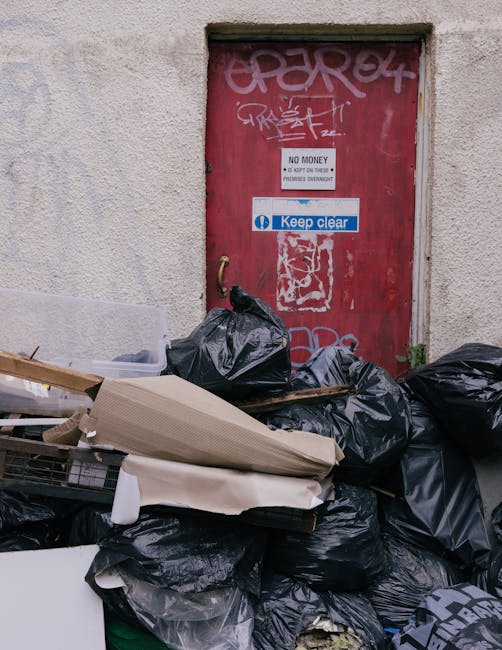
Avoid hidden rubbish removal charges in Penge
If you have ever booked rubbish removal and then watched the final bill creep up, you will know how frustrating hidden extras can feel. One minute you are comparing a tidy-looking quote, the next you are paying more for access, labour, waiting time, or waste that somehow became "special". The good news? You can avoid hidden rubbish removal charges in Penge with a bit of know-how, a clear checklist, and the right questions before anyone turns up at the kerb or on your doorstep.
This guide explains how pricing usually works, where surprise costs tend to appear, and how to compare quotes without getting caught out. We will also cover the local practicalities that matter in everyday London rubbish clearance: stairs, parking, heavy items, mixed waste, and what to check before you say yes.
Think of it as a calm pre-booking sanity check. Not glamorous, admittedly. But very useful.
For readers who want to compare service standards and pricing information directly, it can help to review the company's pricing and quotes information alongside its terms and conditions and payment and security details before booking.
Table of Contents
- Why avoiding hidden rubbish removal charges in Penge matters
- How rubbish removal pricing usually works
- Key benefits of transparent pricing
- Who this is for and when it makes sense
- Step-by-step guidance
- Expert tips for better results
- Common mistakes to avoid
- Tools, resources and recommendations
- Law, compliance and best practice
- Options and comparison table
- Case study or real-world example
- Practical checklist
- Conclusion
- Frequently asked questions
Why Avoid hidden rubbish removal charges in Penge Matters
Hidden charges are not just an annoying surprise. They can change the whole value of a clearance job. A quote that looks cheap at first glance may become expensive once the team arrives and starts adding line items for things that were never discussed clearly. In a busy area like Penge, where access, parking, and property layouts can vary a lot from street to street, unclear pricing is an easy way for a job to become awkward fast.
It matters because rubbish removal is usually booked under pressure. Maybe the loft is full. Maybe the garage has become a holding pen for broken furniture, paint tins, and cardboard. Maybe you are clearing a flat before a move and you just want the mess gone. In that moment, people often focus on speed and forget to interrogate the quote. That is exactly when hidden fees can slip in.
There is also a trust issue. Transparent pricing is a sign that a provider understands the job properly. If the quote is vague, the service may be vague too. And nobody wants a crew standing on the pavement arguing over whether a sofa is "standard" or "oversized" while neighbours peek out of the window. A bit of clarity goes a long way.
In practical terms, avoiding surprise charges helps you:
- budget with confidence
- compare providers fairly
- avoid awkward on-site price changes
- reduce disputes after collection
- choose the right service for the type of waste you have
The better the pricing conversation before the booking, the smoother the job tends to be. Simple, really. Well, simple-ish.
How Avoid hidden rubbish removal charges in Penge Works
Transparent rubbish removal starts with a clear description of what needs collecting. Most pricing models are based on some combination of volume, weight, labour, item type, access, and disposal requirements. The issue is not that these factors exist. The issue is when they are not explained upfront.
A proper quote should usually consider:
- how much waste you have
- what type of waste it is
- whether anything is bulky or unusually heavy
- how easy it is to reach the waste
- how much labour is needed
- whether there are any special handling requirements
For example, a straightforward pile of cardboard and old bagged household rubbish is very different from a ground-floor collection that includes a mattress, a fridge, and a broken wardrobe that has to be carried down two narrow flights of stairs. Same postcode, very different job. That is where a lot of quote confusion begins.
Hidden charges often appear because the initial conversation was too broad. A customer says, "It is just a bit of rubbish," while the actual load includes mixed items, restricted waste, and a tricky route out of the property. To be fair, that is easy to do if you are not used to describing waste in service terms. But it can still lead to problems.
Good providers usually ask follow-up questions or request photos so they can price the job accurately. That is a positive sign, not an inconvenience. If you want a clear benchmark for what the business says it includes, it is sensible to review its what can go in a skip guidance and the relevant service pages, such as waste removal or builders waste clearance, depending on the waste type.
Key Benefits and Practical Advantages
The biggest benefit of avoiding hidden charges is obvious: you pay what you expected to pay. But the practical value goes further than that.
1. Better budget control
Whether you are clearing one room or an entire property, accurate pricing helps you plan. That matters for households, landlords, letting agents, and businesses alike. A quote you can trust is much easier to approve than one with asterisks and vague caveats.
2. Faster decision-making
If you know exactly what is included, you can choose the right provider more quickly. No endless back-and-forth, no second-guessing. You just compare like with like.
3. Less stress on the day
When the team arrives, you should be focused on getting the job done, not negotiating the bill while items are halfway to the truck. Clear pricing reduces friction. That is worth a lot on a wet Tuesday morning when everyone is already slightly fed up.
4. Better service match
Transparent pricing often reflects a more organised service. For example, if you need a specialist collection such as fridge and appliance removal, mattress and sofa disposal, or hazardous waste disposal, you want the price to reflect those details from the start.
5. Lower chance of disputes
When the scope is clear, there is less room for disagreement later. That protects both sides. A good paper trail, even if it is only an email exchange, can save everyone a headache.
Expert summary: The cheapest quote is rarely the best value if it leaves out access, labour, waste type, or disposal costs. The safest approach is to compare complete quotes, not headline numbers.
Who This Is For and When It Makes Sense
This approach is useful for almost anyone booking waste collection in Penge, but some people benefit more than others.
Homeowners and tenants
If you are clearing a house, flat, loft, garage, or garden, you are likely dealing with mixed waste and a bit of uncertainty around volume. That is exactly where hidden fees creep in. A service such as house clearance, flat clearance, loft clearance, or garden clearance is easier to price properly when the contents are described clearly.
Landlords and letting agents
End-of-tenancy clearances often involve abandoned items, bulky furniture, and a tight turnaround. Costs can rise if the access is bad or the waste needs sorting on site. Clear estimates save time and help keep refurbishment plans on schedule.
Businesses and offices
Commercial jobs can include desks, chairs, filing cabinets, packaging, confidential paperwork, or a mix of all four. A provider offering business waste removal or office clearance should explain whether collection, loading, and disposal are all included. If data-bearing materials are involved, you may also need confidential shredding.
Trades and renovators
Builders waste is notorious for quote surprises because rubble, plasterboard, timber, and mixed construction waste are not all treated the same way. If that is your situation, a dedicated builders waste clearance page or a clear waste-removal breakdown is worth checking carefully.
In short, if your job involves anything beyond "a few bin bags", transparent pricing matters. A lot.
Step-by-Step Guidance
Here is a straightforward way to reduce the risk of hidden rubbish removal charges in Penge before you book.
- List exactly what needs removing. Include bulky items, loose bags, broken furniture, appliances, and any awkward bits like dismantled shelving or garden waste.
- Separate normal waste from special waste. Paint, fridges, old electronics, mattresses, and hazardous materials may need different handling.
- Take clear photos. A few well-lit images often help more than a long explanation. Try to show the whole pile and the route out, not just the items themselves.
- Check access honestly. Mention stairs, narrow hallways, parking restrictions, loading distance, locked gates, or lift issues. Small details can make a big difference.
- Ask what the quote includes. Does it cover labour, loading, disposal, VAT if applicable, and any waiting time?
- Ask what could trigger extra charges. You want the awkward stuff named before booking, not after collection has started.
- Confirm the final price in writing. Email, booking confirmation, or message thread. Something you can refer back to later.
- Read the terms carefully. Especially around cancellations, additional items, no-access situations, and restricted waste.
If a company gives you a broad price but refuses to clarify the assumptions behind it, that is your cue to pause. Not panic, just pause.
And yes, it is a bit tedious to ask all these questions. But tedious is cheaper than surprise.
Expert Tips for Better Results
After seeing a lot of clearance jobs go smoothly, and a few go sideways, a pattern becomes obvious: the people who prepare well almost always get a cleaner, calmer experience.
Be specific about items, not just "a load of rubbish"
That phrase is understandable, but it is not helpful for pricing. Say "two sofas, one wardrobe, six bin bags, a broken chest of drawers, and a fridge" instead. It sounds more organised because, well, it is.
Ask whether labour is time-based or job-based
Some providers quote by load size, others by the time required on site, and some use a mix. Neither is wrong, but you should know which model is being used. That way, you can spot where overtime-style charges might appear.
Watch for vague words
Words like "from", "subject to inspection", and "additional charges may apply" are not necessarily bad. They just need explaining. If the base price is low but every real-world detail sits outside it, the quote is not really useful.
Match the service to the waste
Choosing the right service page can reduce confusion from the start. For example, furniture-heavy jobs may fit furniture clearance or furniture disposal, while mixed household clearances may be better suited to a home clearance approach.
Think ahead about recycling and sorting
If you know what can be reused, recycled, or needs special handling, the pricing conversation becomes much clearer. The company's recycling and sustainability information can also tell you how waste is likely to be processed.
A small habit helps too: keep a list on your phone as you fill the pile. It takes seconds and saves a lot of "oh, and there was also..." later on.
Common Mistakes to Avoid
Most hidden-charge problems come from a handful of very ordinary mistakes. Nothing dramatic. Just little gaps that get expensive.
- Being too vague about the load - "some rubbish" is not enough for a reliable quote.
- Forgetting about access - stairs, parking, and distance from the property can change the job.
- Assuming all waste is the same - it usually is not, especially with appliances or builder's waste.
- Not asking about minimum charges - some small jobs still hit a set call-out or load threshold.
- Ignoring the terms and conditions - the details are often there, just not read until after the invoice arrives.
- Mixing restricted items in with general waste - this can trigger reclassification or extra handling.
- Booking in a rush without comparison - one quick call can be fine, but not if it is the only call you make.
There is also a subtle mistake people make: they pick the lowest price and then assume the service is identical. It rarely is. Two quotes can look similar while hiding very different assumptions. That is why clarity matters more than the first number you see.
Tools, Resources and Recommendations
You do not need specialist software to avoid hidden rubbish removal charges in Penge. A few basic tools are enough.
- Phone camera - take wide shots of the waste and the access route.
- Notes app - list each item and any special conditions.
- Message or email thread - keep the quote in writing.
- Measuring tape - useful for bulky furniture, appliances, and tight hallways.
- Budget buffer - even with a good quote, it helps to allow a little room for legitimate changes if the scope shifts.
When comparing services, the most useful pages are usually the ones that explain scope and expectations. In this case, pricing and quotes, terms and conditions, and service-specific pages such as waste removal and house clearance are a sensible starting point.
If you are dealing with a more complex job, it can also help to read the company's insurance and safety information and health and safety policy. That is especially useful for larger clearances, commercial premises, or awkward items. For anyone managing waste in a shared building, the accessibility statement can also give a sense of how the service thinks about practical access issues.
Law, Compliance, Standards, or Best Practice
Here we should be careful and practical. Waste collection in the UK sits within a broader framework of environmental, transport, safety, and duty-of-care expectations. You do not need to be a legal expert to book a collection, but you should expect the provider to handle waste responsibly and to be clear about what they can and cannot take.
Best practice usually includes:
- clear description of waste types before booking
- honest handling of restricted or hazardous items
- safe loading and transport
- proper disposal or recycling routes
- clear terms for extra work, additional items, and access problems
If a provider is vague about hazardous waste, electrical items, or data-bearing materials, ask more questions. That is not being awkward. That is being sensible.
For some jobs, the issue is not just cost; it is compliance. Builders waste, appliances, and specialist disposal tasks can require different handling approaches, and a reputable provider should be able to explain those differences in plain English. No legal waffle, please. Just the facts.
Options, Methods, or Comparison Table
There are a few ways people in Penge deal with unwanted waste, and each has different pricing and risk points.
| Option | Best for | Hidden charge risk | What to check |
|---|---|---|---|
| Man and van style rubbish removal | Mixed household waste, small to medium clearances | Medium to high if scope is vague | Load size, labour, access, minimum charge |
| Specialist item removal | Appliances, mattresses, sofas, one-off bulky items | Medium if item type is not declared | Item-specific handling, disposal fees, stair carries |
| Full property clearance | House, flat, loft, garage, or estate clear-outs | Medium if volume is under-described | Room count, photo survey, labour, time on site |
| Builders waste clearance | Renovation and construction debris | High if waste mix is unclear | Material type, weight, rubble, plasterboard, access |
| Self-managed skip or container hire | Jobs with space and predictable waste | Medium if the load exceeds expected volume | Permits, space, allowed items, fill level guidance |
If your waste is simple and the access is good, a straightforward collection can be ideal. If the load is mixed, bulky, or hard to reach, a more detailed quote is usually worth the extra five minutes on the phone. Honestly, it saves much more time later.
Case Study or Real-World Example
Picture a typical Penge flat clearance on a Friday afternoon. The customer says there are "just a few bits": a wardrobe, a mattress, some bags, and an old fridge. Sounds manageable. But when the team arrives, they find the wardrobe is still assembled, the mattress is up a narrow stairwell, the fridge is wedged behind a kitchen door, and the bags include mixed waste plus some broken shelving from a DIY project.
If none of that was mentioned, the quote may no longer fit the job. That is where extra charges often appear. Not because anyone is trying to be difficult, but because the real scope is bigger than the original description.
Now compare that with a better-prepared booking. The customer sends three photos, lists the items clearly, mentions the stairs, and notes that the fridge is in the kitchen. The provider can price it properly. The team arrives, loads efficiently, and the final bill matches the quote. Boring? Maybe. But boring is nice when money is involved.
That difference often comes down to two things: accurate information and clear terms. Nothing fancy. Just good housekeeping, really.
Practical Checklist
Use this before you confirm any rubbish removal booking in Penge.
- Have I listed every item that needs collecting?
- Have I included bulky, heavy, or awkward items?
- Have I described access clearly, including stairs and parking?
- Have I separated general waste from specialist waste?
- Have I asked whether labour, loading, and disposal are included?
- Have I checked for minimum charges or call-out fees?
- Have I asked what would trigger an extra charge?
- Have I received the price in writing?
- Have I read the terms and conditions?
- Do I know how payment will be taken and when?
- Have I confirmed whether recycling or reuse is part of the process?
- Have I compared the quote with at least one other option, where sensible?
If you can tick most of those boxes, you are in a strong position. No one gets everything perfect, but this gets you close enough to avoid most nasty surprises.
Conclusion
Avoiding hidden rubbish removal charges in Penge is really about asking a few sensible questions before the van arrives. Clear waste descriptions, honest access details, written quotes, and proper terms are usually enough to keep a job straightforward and fairly priced.
The best providers do not mind detailed questions. In fact, they usually prefer them. It means fewer misunderstandings, fewer awkward moments at the door, and a much smoother experience all round. And for you, it means less worry and a lot more control over the final cost.
When you are ready to compare options, look for clarity first and the cheapest headline number second. That small shift in approach can save time, money, and a fair bit of frustration.
Get a free quote today and see how much you can save.
If you want to take the next step with a provider that explains its service clearly, you can also review the company's about us page and contact us information to understand how they work before booking.
Frequently Asked Questions
What are hidden rubbish removal charges?
Hidden charges are extra costs that were not clearly explained before booking. They often relate to access, labour, item type, waiting time, or special disposal needs.
How can I avoid surprise fees when booking rubbish removal in Penge?
Give a full description of the waste, share photos, explain access issues, ask what is included, and make sure the price is confirmed in writing.
Do rubbish removal companies charge more for stairs?
Often, yes. If items need carrying up or down stairs, the job may take longer and involve more labour, so it is worth mentioning early.
Why does the final price sometimes differ from the quote?
Usually because the actual load, access, or waste type was different from what was originally described. Clear information before booking reduces that risk.
Is the cheapest quote always the best value?
Not usually. A low headline price can be misleading if it excludes labour, disposal, or additional item handling. Compare full quotes instead.
Should I send photos before booking rubbish removal?
Yes, if possible. Photos help the provider judge volume, access, and item type more accurately, which usually leads to a more reliable quote.
Do special items like fridges or mattresses cost more?
They can. Items such as appliances and mattresses may need separate handling or disposal arrangements, so they should always be identified in advance.
What should I check in the terms and conditions?
Look for details about minimum charges, cancellation rules, access problems, extra items, restricted waste, and payment timing.
Can builders waste lead to extra charges?
Yes, especially if the waste mix is not clear. Heavy rubble, plasterboard, and mixed construction materials can affect pricing and handling.
How do I know if a quote is fair?
A fair quote is clear about what is included, what is not, and what could change the price. If it sounds too broad, ask for more detail.
Does recycling affect the cost?
It can influence pricing in some cases, depending on the waste type and sorting required. It is also a sign that the provider is handling waste responsibly.
What is the best first step if I need a clear quote quickly?
Take a few photos, make a simple item list, note access details, and ask for a written estimate based on the full scope of the job.